
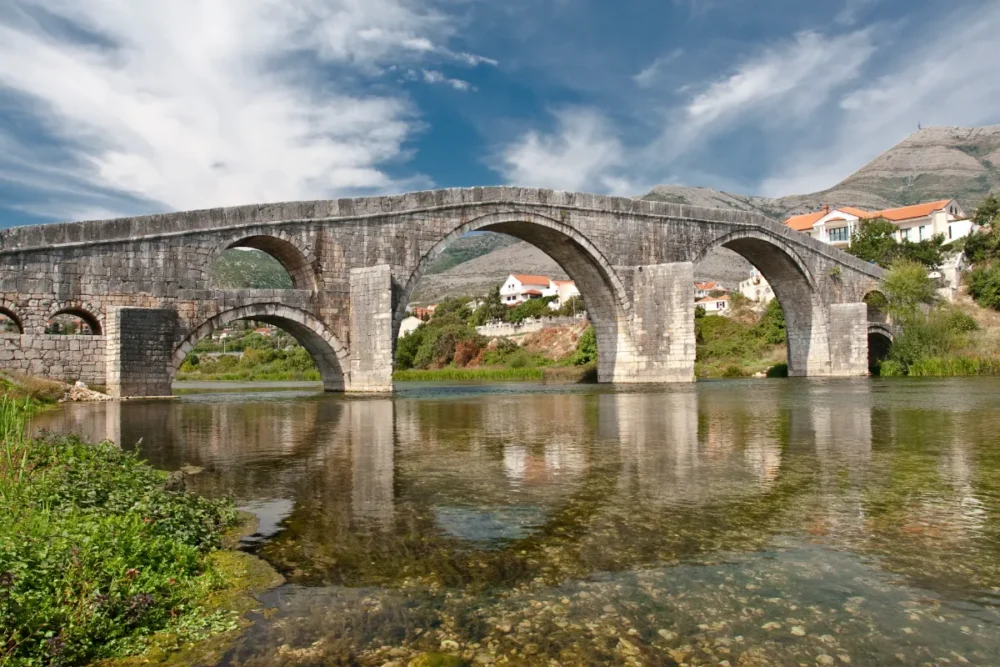
Most bridges stay where they were built. This one did not. Four hundred years after its first stones were laid, the Arslanagić Bridge was taken apart piece by piece, every block numbered, and carried down the river to a new home in Trebinje.
Today it is the most photographed place in town. But to understand why it stands where it does, you have to go back to 1574.
A gift from a Grand Vizier
In the 16th century the most powerful man in the Ottoman Empire after the Sultan himself was a Grand Vizier born in a small Bosnian village: Mehmed-paša Sokolović. He left bridges, mosques and inns across the Balkans, and in 1574 he built a stone bridge over the Trebišnjica river, a few kilometres upstream from Trebinje.
It was finished three years before his most famous bridge, the one on the Drina in Višegrad that later inspired Ivo Andrić’s novel The Bridge on the Drina. Local tradition says that Sokolović built the Trebinje bridge in memory of his son, who had died fighting the Venetians.
The bridge carried an important road: caravans travelling between the heart of Bosnia and the port of Novi, today’s Herceg Novi on the Adriatic, crossed the river here.
The man who collected the toll
The bridge did not get its name from the man who built it, but from the man who guarded it. In 1687 Venice took Herceg Novi, and an Ottoman officer from Novi, Arslan-aga, moved to the Trebinje area. He was given land nearby and the job of collecting the toll from everyone who crossed.
He built his house beside the bridge, a small village grew around it, and both took his name: the village of Arslanagići and the Arslanagić Bridge, the bridge of Arslan-aga.
Wars, water and a bridge under a lake
For almost four centuries the bridge survived floods, empires and wars. During the Second World War part of it was blown up, and the broken section was later repaired.
Then came the biggest threat of all: progress. In the 1960s Yugoslavia built a system of dams and hydropower plants on the Trebišnjica. In 1965 the new Gorica reservoir began to fill, and the old bridge disappeared under the water.
Moved stone by stone
The bridge was not forgotten. In 1966 the lake was lowered and the bridge was carefully taken apart. Every stone block was numbered, so that the builders would know exactly where it belonged, and the stones were carried down the river.
In 1970 the rebuilding began a few kilometres downstream, in the Gradina neighbourhood of Trebinje. About two years later the 16th-century bridge stood again, stone for stone, in its new home in the town.
Local people like to say that over the years there were even offers to buy the bridge, with the most serious one coming all the way from Canada. The answer was always the same: it is not for sale.
One bridge, two names, two addresses
Since the 1990s the bridge has also been known as Perovića most, and today locals use both names. It is often called the only bridge in the country with two names and two addresses: the place where it was born, now under the lake, and the place where it lives.
In 2006 it was declared a National Monument of Bosnia and Herzegovina.
Some bridges are built to stay. This one was built to last, even if it had to move.
Visit the bridge
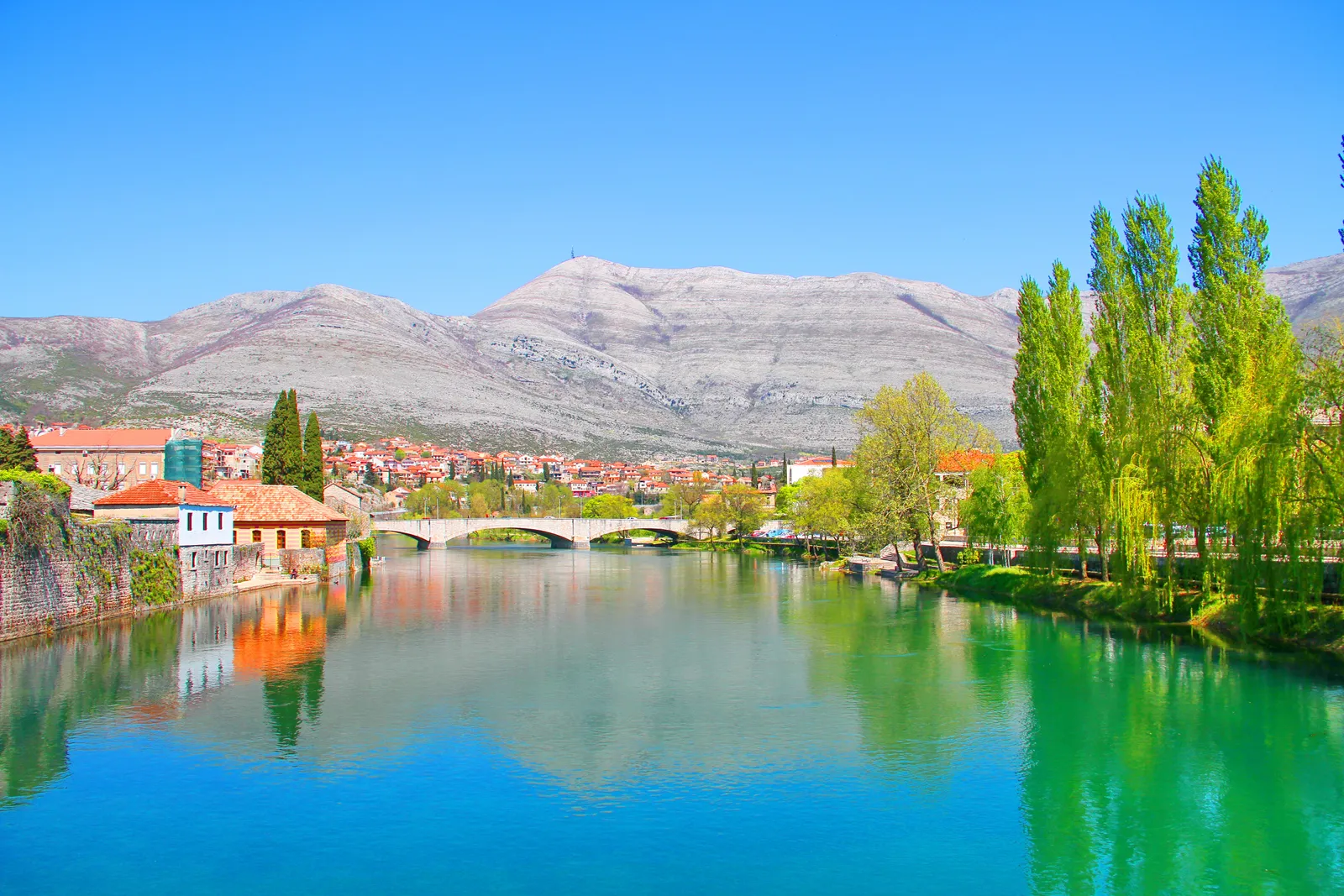
The Arslanagić Bridge is a short walk or drive from the centre of Trebinje. Come early in the morning, when the river is calm and the arches are mirrored perfectly in the green water, or at sunset, when the old stone turns gold. Walk across, touch the stones, and try to imagine each one with a number painted on it, waiting on the riverbank to be put back in its place.
The bridge is a stop on our City tour and Tvrdoš wine tasting, together with the Old Town, Hercegovačka Gračanica and Tvrdoš Monastery.
Discover Trebinje with your host
Private walks, wine tasting at Tvrdoš and day trips from Dubrovnik, planned personally by a licensed local guide.
WhatsApp / Viber: +387 66 813 911
Email: booking.trebinjeguide@gmail.com